WIREPHOTO: Mickey Mantle - [1974-01/16] UPI - 'HOF Bound' (Yankees)
| Book Value | n/a |
|---|---|
| Our Price |
$ 24.95
Add to cart
|


![WIREPHOTO: Mickey Mantle - [1974-01/16] UPI - 'HOF Bound' (Yankees) cards value](/vintage-cards/wirephotos/wirephoto-mickey-mantle-17.jpg)

Please wander around the website for more info, prices, values & images
on vintage baseball, football, basketball, hockey, sport and non-sports cards.
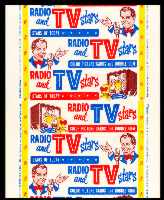

1952/1953 Bowman
|
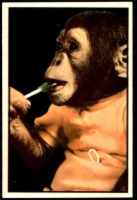 Another popular card is chimpanzee J. Fred Muggs ROOKIE card.

Topps Legendary Vault
From early 1950's on up, Topps has been gathering their rare, unique,
1-of-1 items.
In 1989 they chose Guernsey's Auction House to start unloading
their special rare collectibles. This was such a huge event that
even the auction catalog is a collectible. The auction took place
August 19th and 20th in New York City.
Click to see our current and past
Topps Vault, Proofs & Blank-Backs
They sold everything !!!
Topps work product included mockups, design alternatives,
artwork, photos, negatives, transparencies, flexichromes,
proof sheets, color separations, uncut sheets...
Also: Player's contracts, Canceled checks, Letters,
Unredeemedand redemption prizes, Special Binders of card sets...
Final proceeds of over 3,000 items was around $1.6 million,
a stunning amount in the day. There were (4) additional pages
of non-sport items via mail-only auctions that remained open
until year end. Collector Keith Olbermann attended the auction
and described it to Sports Illustrated, "It's like an archaeological dig."
Topps archive material continued to accumulate after the auction
ending up with another treasure of over 250,000 transparencies,
uncut sheets, color separations, art, photos, slides, proof sheets
& wrappers, canceled checks, contracts and one-of-a-kind
items to sell.
(You may be on that page now) |
Cabinet Card Were oversized trading cards featuring paintings issued mostly 1910-1915.
Card Show is a gathering of dealers & collectors looking to buy/sell/trade sports cards and memorabilia.
Card Stock is the material a card is printed on. Usually paper-based, today companies play with the card stock and sometimes it appears to be wood or leather or see-thru acrylic ...
Cello Pack is a card pack whose wrapper is see-thru plastic. Usually the top & bottom cards are seen. Unopened cello packs showing major stars and rookies sell for heavy premiums.
Centering is the balance of the borders: top/bottom & left/right. On perfectly-centered cards, top/bottom borders match as do the left/right borders. Centering is presented as a set of numbers & directions and often included with the grade. Perfectly-centered is "50/50 t/b" AND "50/50 l/r". As centering gets worse, one number increases and the other decreases. For example: 90/10 t/b is considered extremely off-center top to bottom. The numbers add up to 100 (50/50, 60/40, 90/10 ...).
Certificate Of Authenticity (COA) A document used to verify legitimacy of a collectible. NOTE: Keep in mind that COA's are easier to fake then autographs.
Common A card of a non-star player is considered a "Common" as opposed to cards of a star players or specialty/subset cards such as league leaders, teams cards, World Series cards...
Condition (Grade) Centering, corner wear, photo clarity, edges, creases, print flaws ... all combine to determine a card's condition or grade. Along with rarity/scarcity it is the major factor in a card's value.
Crease Defect usually caused by bending the card. Hard to see, or not, a crease lowers the card's grade (VG or lower) and greatly diminishes it's value.
