1968 Topps - PHILLIES Near Complete TEAM SET/Lot (23/25)
Nearly all NEAR MINT to NM/MINT !!! With Johnny Callison,Bill White,Team card,Tony Taylor... Missing: #477,567. Also does not include multi-team rookie card #579. (stock photo) Nicer than the $250 one on eBay.| Grade | *** HIGH GRADE *** |
|---|---|
| Book Value | n/a |
| Our Price |
$ 145
Add to cart
|




Please wander around the website for more info, prices, values & images
on vintage baseball, football, basketball, hockey, sport and non-sports cards.

1963 Post Cereal Baseball Checklist & Values
1963 Post Cereal, like their earlier 1961 and 1962 issues, this set contained 200
cards issued on the back of assorted Post cereal boxes.
Click for complete
1961 Post Cereal baseball cards checklist & prices
Click for complete 1962 Post Cereal baseball cards checklist & prices Click for complete 1962 Post Cereal Canadian baseball cards checklist & prices Click for complete 1963 Post Cereal baseball cards checklist & prices Note: You may be on that page right now. |
1971 O-Pee-Chee/OPC Baseball Cards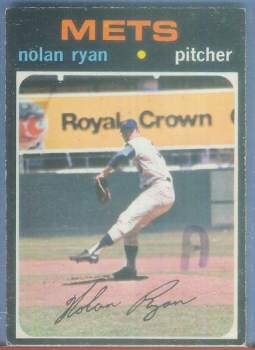
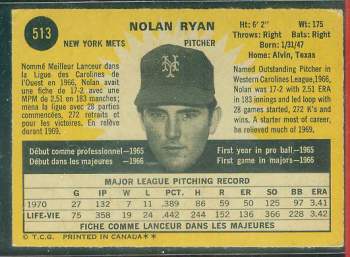
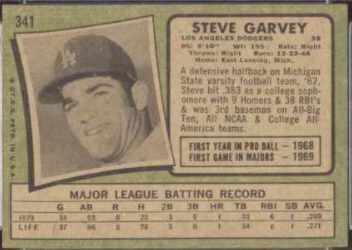 O-Pee-Chee is also called OPC and Topps Canadian.
Most vintage OPC sets were near replicas of their Topps brothers
in the exact same design, with the major difference being the
French & English backs. But in 1971, O-Pee-Chee made
several changes to their set including a complete redesign of
the card backs. OPC also changed over 20 cards including the
creation of the first "Traded" cards along with adding more EXPOS
to the set including #202 and #289.
O-Pee-Chee is also called OPC and Topps Canadian.
Most vintage OPC sets were near replicas of their Topps brothers
in the exact same design, with the major difference being the
French & English backs. But in 1971, O-Pee-Chee made
several changes to their set including a complete redesign of
the card backs. OPC also changed over 20 cards including the
creation of the first "Traded" cards along with adding more EXPOS
to the set including #202 and #289.
1971 OPC's short prints are legendary, at only 5% of Topps' production, making this set very rare even in Canada. Some say 1971 OPC short print high numbers are even scarcer than the very, very scarce 1952 Topps highs, that mostly ended up being dumped deep into the Atlantic ocean.
The Semi-High #'s 524-643 are VERY, VERY costly on eBay and
elsewhere on the internet and the High #'s are INSANE !!!
ROOKIES included Hall-of-Famer Bert Blyleven,
Steve Garvey, Davey Concepcion, Bobby Valentine,
George Foster, Dusty Baker...
1971 Mattel Instant Replay Discs 1971 Topps 1971 Kellogg's
1970 OPC/O-Pee-Chee Baseball
Click for all of our OPC/O-Pee-Chee Baseball issues |
The first baseball trading cards date back to 1869. For many years, baseball cards were packaged in packs of tobacco as a way to increase sales the same way that today prizes are packaged in boxes of cereal. In the 1920's and 1930's, candy and gum companies started packaging baseball cards in their products as well.
Baseball card production was virtually halted in the early 1940's due to paper shortages created by World War II. The "Modern Era" of baseball cards began in 1948 when Bowman Gum Inc. offered one card and one piece of gum in a pack for a penny.
The first important football set was the Mayo set featuring college players in 1984. Other than the 1935 National Chicle set no other key football set was issued until 1948 when noth Bowman and Leaf produced sets.
